Creating the data source
E-goi is a marketing automation and email-sending SaaS. The E-goi data integration to the Data Warehouse built by Kondado gives you access to your sending and campaign data in your analytics cloud.
Adding the connector
To automate E-goi ETL with Kondado for your database, follow the steps below:
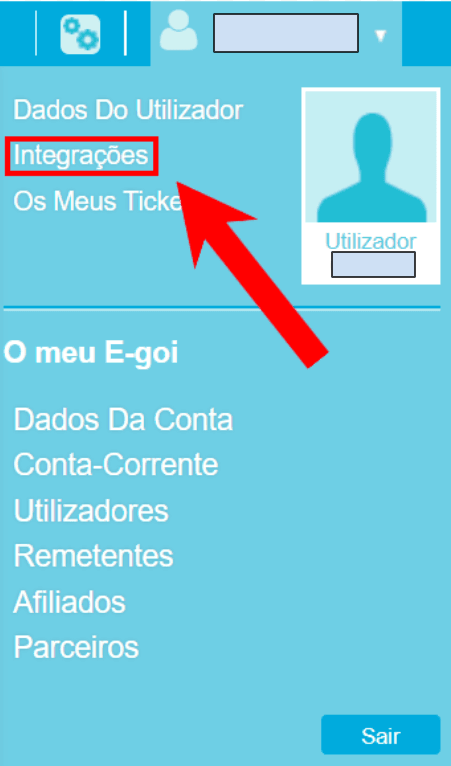
1) Log in to your E-goi account and, in the panel, click on your username and then on "Integrations"
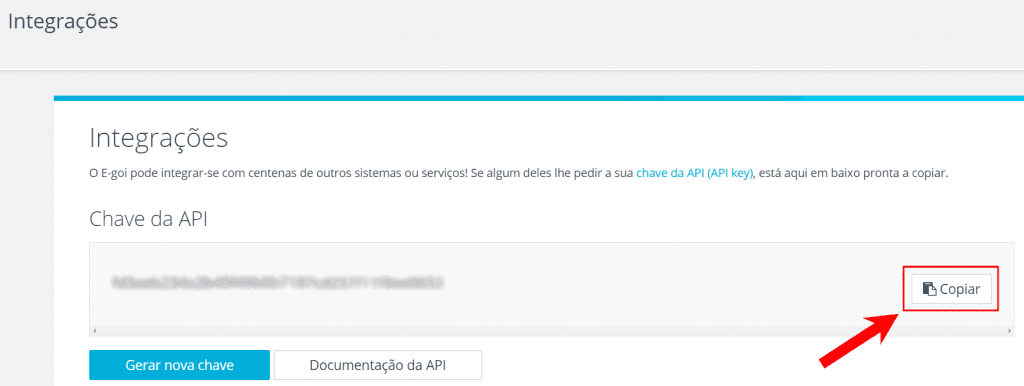
2) On the new page, copy the value of "API Key"
3) On the Kondado platform, go to the add connectors page and select the E-goi connector
4) Name your connector and, in "API Key", paste the key copied in step (2)
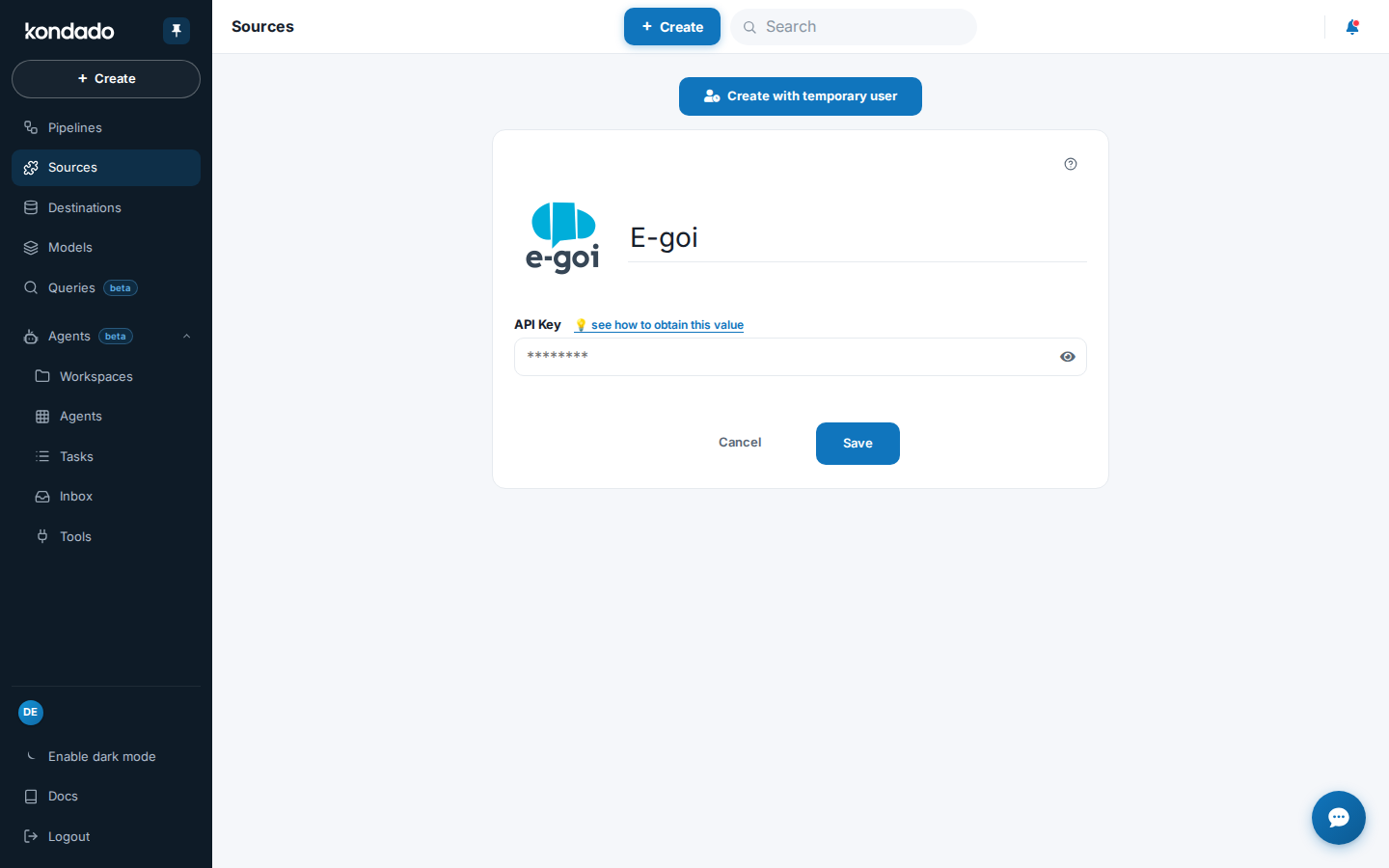
Now just save the connector and start integrating your E-goi data into the Data Lake or Data Warehouse.
Pipelines
Summary
Relationship chart
Click to expand
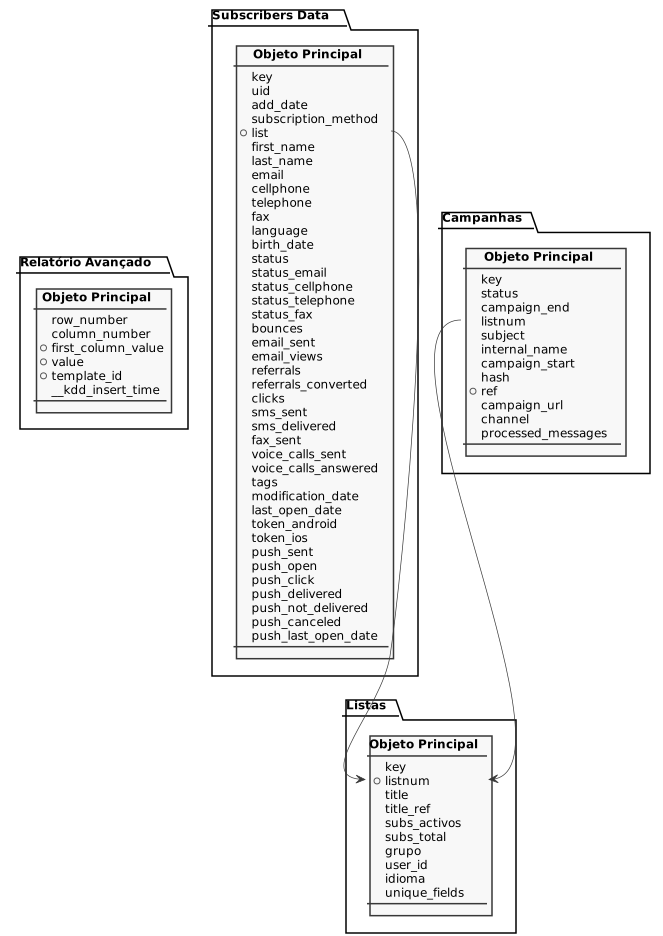
Advanced report
Replication type: Incremental
E-goi advanced report exported as cells (row/column), with values per report template.
| Campo | Tipo | |
|---|---|---|
|
int |
[en] Row number of the cell in the exported advanced report. |
|
|
int |
[en] Column number of the cell in the exported advanced report. |
|
|
text |
[en] Value of the first column of the row, used as the row label/identifier in the report. |
|
|
text |
[en] Value of the advanced report cell at the indicated row and column. |
|
|
text |
[en] Identifier of the advanced report template that generated the data. |
|
|
timestamp |
[en] Date and time the record was loaded by Kondado (technical field, not from the API). |
Campaigns
Replication type: Full
E-goi marketing campaigns (email, SMS, voice and push), with identifiers, channel, status and sending dates.
| Campo | Tipo | |
|---|---|---|
|
text |
[en] Record key/index returned by the E-goi API for the campaign. |
|
|
text |
[en] Current campaign status (e.g. standby, processing, finished, archived). |
|
|
timestamp |
[en] Date and time the campaign sending was completed. |
|
|
text |
[en] Identifier number of the contact list associated with the campaign. |
|
|
text |
[en] Subject/title of the campaign. |
|
|
text |
[en] Internal campaign name used for organization within the account. |
|
|
timestamp |
[en] Date and time the campaign sending was launched/started. |
|
|
text |
[en] Unique code (hash) identifying the campaign. |
|
|
text |
[en] Unique reference number identifying the campaign. |
|
|
text |
[en] Public URL to view the campaign. |
|
|
text |
[en] Distribution channel of the campaign (email, SMS, voice, push, web push). |
|
|
int |
[en] Number of messages processed/sent in the campaign. |
Lists
Replication type: Full
E-goi contact lists, with identifiers, language, grouping and active/total subscriber counts.
| Campo | Tipo | |
|---|---|---|
|
text |
[en] Record key/index returned by the E-goi API for the list. |
|
|
text |
[en] Identifier number of the contact list. |
|
|
text |
[en] Public name of the list. |
|
|
text |
[en] Internal (reference) name of the list. |
|
|
float |
[en] Number of currently active subscribers in the list. |
|
|
text |
[en] Total number of subscribers in the list, including inactive ones. |
|
|
text |
[en] Group/category the list belongs to. |
|
|
text |
[en] Identifier of the user that owns the list. |
|
|
text |
[en] Primary language of the list. |
|
|
text |
[en] Identifier fields used to detect duplicate subscribers in the list. |
Subscribers Data
Replication type: Full
Subscriber (contact) data for an E-goi list, including profile data, per-channel status and engagement metrics for email, SMS, voice and push.
| Campo | Tipo | |
|---|---|---|
|
text |
[en] Record key/index of the subscriber returned by the E-goi API. |
|
|
text |
[en] Unique identifier of the subscriber (contact). |
|
|
timestamp |
[en] Date the subscriber was added to the list (subscription). |
|
|
text |
[en] Method by which the subscriber was added to the list. |
|
|
text |
[en] Identifier number of the list the subscriber belongs to. |
|
|
text |
[en] First name of the subscriber. |
|
|
text |
[en] Last name of the subscriber. |
|
|
text |
[en] Email address of the subscriber. |
|
|
text |
[en] Mobile phone number of the subscriber. |
|
|
text |
[en] Landline phone number of the subscriber. |
|
|
text |
[en] Fax number of the subscriber. |
|
|
text |
[en] Language of the subscriber. |
|
|
text |
[en] Birth date of the subscriber. |
|
|
text |
[en] Subscriber status (0=unconfirmed, 1=active, 2=removed, 4=inactive). |
|
|
text |
[en] State of the subscriber email channel (0=inactive, 1=active). |
|
|
text |
[en] State of the subscriber mobile/SMS channel (0=inactive, 1=active). |
|
|
text |
[en] State of the subscriber phone channel (0=inactive, 1=active). |
|
|
text |
[en] State of the subscriber fax channel (0=inactive, 1=active). |
|
|
float |
[en] Number of message delivery failures for the subscriber. |
|
|
float |
[en] Total emails sent to the subscriber. |
|
|
float |
[en] Number of email opens by the subscriber. |
|
|
float |
[en] Number of referrals initiated by the subscriber. |
|
|
float |
[en] Number of converted referrals (the referred person signed up). |
|
|
float |
[en] Number of clicks made by the subscriber. |
|
|
float |
[en] Number of SMS messages sent to the subscriber. |
|
|
float |
[en] Number of SMS messages successfully delivered to the subscriber. |
|
|
float |
[en] Number of faxes sent to the subscriber. |
|
|
float |
[en] Number of voice calls made to the subscriber. |
|
|
float |
[en] Number of voice calls answered by the subscriber. |
|
|
text |
[en] Tags associated with the subscriber. |
|
|
date |
[en] Date of the last update to the subscriber information. |
|
|
date |
[en] Date of the subscriber last email open. |
|
|
text |
[en] Android device push token of the subscriber. |
|
|
text |
[en] iOS device push token of the subscriber. |
|
|
float |
[en] Number of push notifications sent to the subscriber. |
|
|
float |
[en] Number of push notifications opened by the subscriber. |
|
|
float |
[en] Number of push notification clicks by the subscriber. |
|
|
float |
[en] Number of push notifications delivered to the subscriber. |
|
|
float |
[en] Number of push notifications not delivered to the subscriber. |
|
|
float |
[en] Number of push notifications canceled for the subscriber. |
|
|
timestamp |
[en] Date of the subscriber last push notification open. |
Notes
- Part of this documentation was automatically generated by AI and may contain errors. We recommend verifying critical information
Add E-goi as a data source on Kondado
Connect your E-goi marketing data to Kondado for automated ETL pipelines into your data warehouse, data lake or BI tool.
Sign in to E-goi
Log in to your E-goi account with a user that can manage API keys for the workspace you want to replicate.
Copy your E-goi API Key
On the panel, click your username and then Pipelines. On the page that opens, copy the value shown as API Key.
Add E-goi as a data source in Kondado
On the Kondado platform, open the add data sources page and select the E-goi data source.
Configure and save the connection
Name your data source and paste the API key from the previous step into the API Key field, then save the data source.
Send E-goi data to your destination
Pick the entities you want to replicate — Campaigns, Lists and Subscribers Data — and route them to a supported destination such as a Data Lake, Data Warehouse or BI tool.