Creating the data source
Microsoft SQL Server is a relational database management system created by Microsoft. The data integration from SQL Server to the Data Warehouse created by Kondado allows you to access your SQL Server data in your analytical cloud.
Adding the data source
To automate the ETL from SQL Server with Kondado to your database, follow the steps below:
- Whitelist Kondado's IPs on the database server (and on your VPC) for the port that will be used to connect with SQL Server
- Have the address, port, database, user, and password data to access your SQL Server at hand
- On the Kondado platform, go to the page to add data sources and select the Microsoft SQL Server data source
- Give a name to your data source and enter the information from step (2)
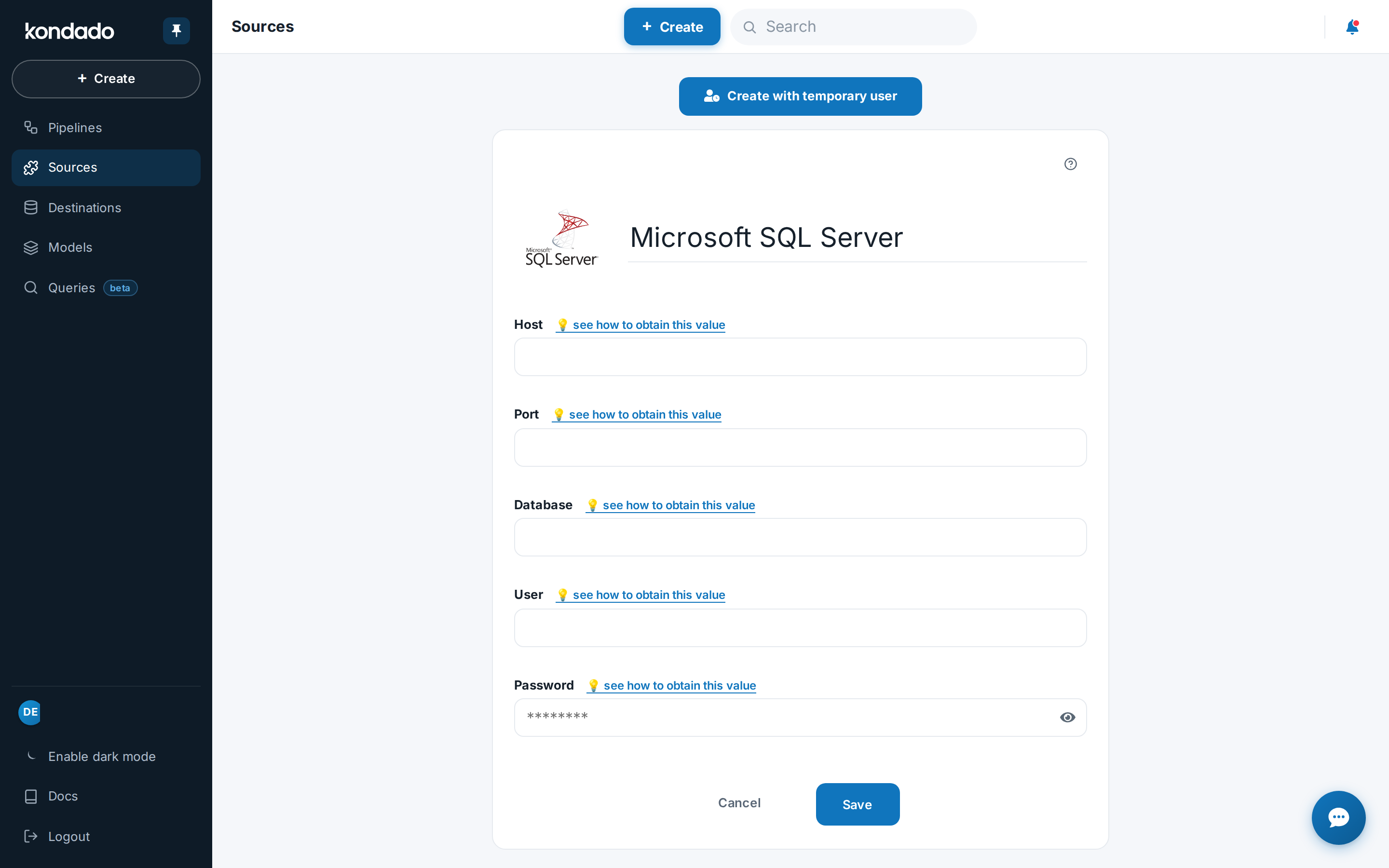
Now just save the data source and start integrating your SQL Server data into the Data Lake or Data Warehouse.
Pipelines
Summary
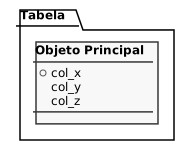
Relationship chart
Click to expand
Notes
- Part of this documentation was automatically generated by AI and may contain errors. We recommend verifying critical information
Add Microsoft SQL Server as a Data Source on Kondado
Configure your SQL Server database as a source in Kondado to automate ETL into your cloud data warehouse.
Whitelist Kondado's IPs
Allow Kondado's IP addresses through your database server and VPC firewall for the SQL Server port. This secure connection is part of Kondado's security infrastructure.
Gather connection credentials
Collect your SQL Server address, port, database name, username, and password. These will authenticate Kondado's access to your relational database.
Select SQL Server on the platform
In the Kondado platform, navigate to the data sources section and choose the Microsoft SQL Server connector.
Configure and name your source
Enter a descriptive name for this source and input the credentials from step 2. Save to complete the setup.
Start integrating tables and views
Begin syncing your SQL Server tables and views to your destination. Enable incremental loads by selecting a datetime/timestamp column and defining the primary key.