Creating the data source
By adding the Pushwoosh data source to Kondado, you can access your notification and campaign data in your Data Warehouse or Data Lake - a process also known as ETL or ELT
Adding the data source
Requirements
- Your Pushwoosh account must be of the Private Offering type
- Preferably, follow the instructions below with a user who has a higher access level in the application
Instructions
1) Access the API Access section of your control panel
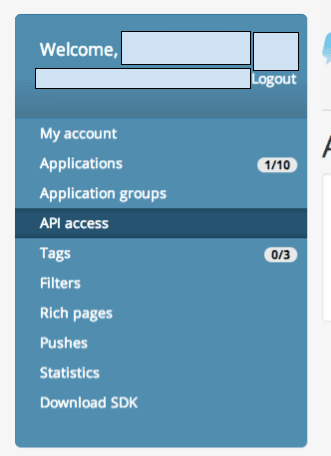
2) Click on Generate new access token

3) Configure the token as you prefer and click Save
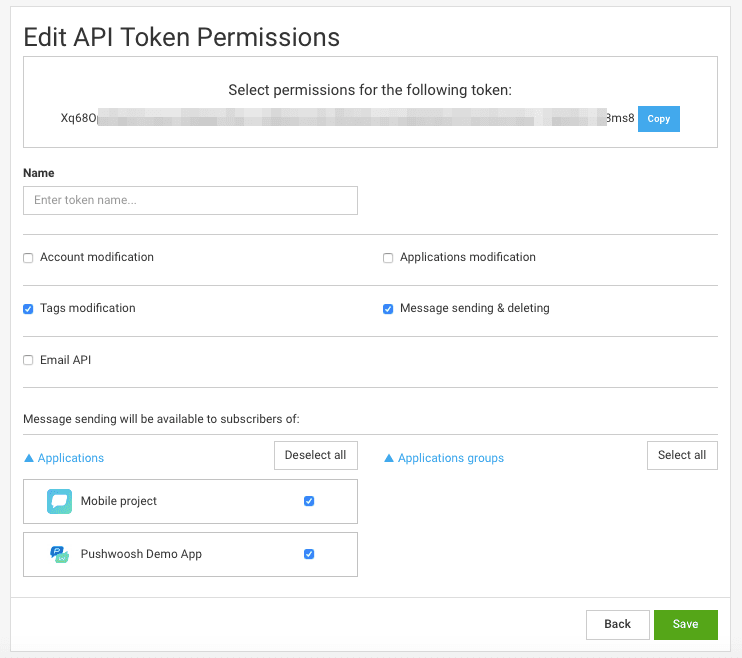
4) Copy the value of your new Token
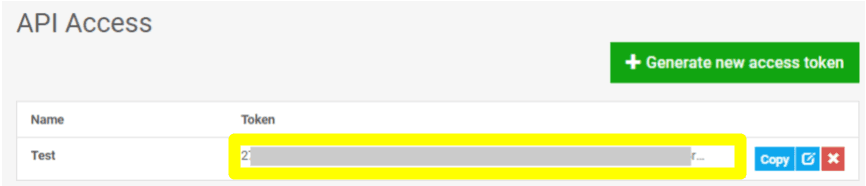
5) Log in to Kondado, go to the add data sources page and select the Pushwoosh data source
6) In the data source, under "Name" give your data source a name and, under Token, paste the value obtained in step (4)
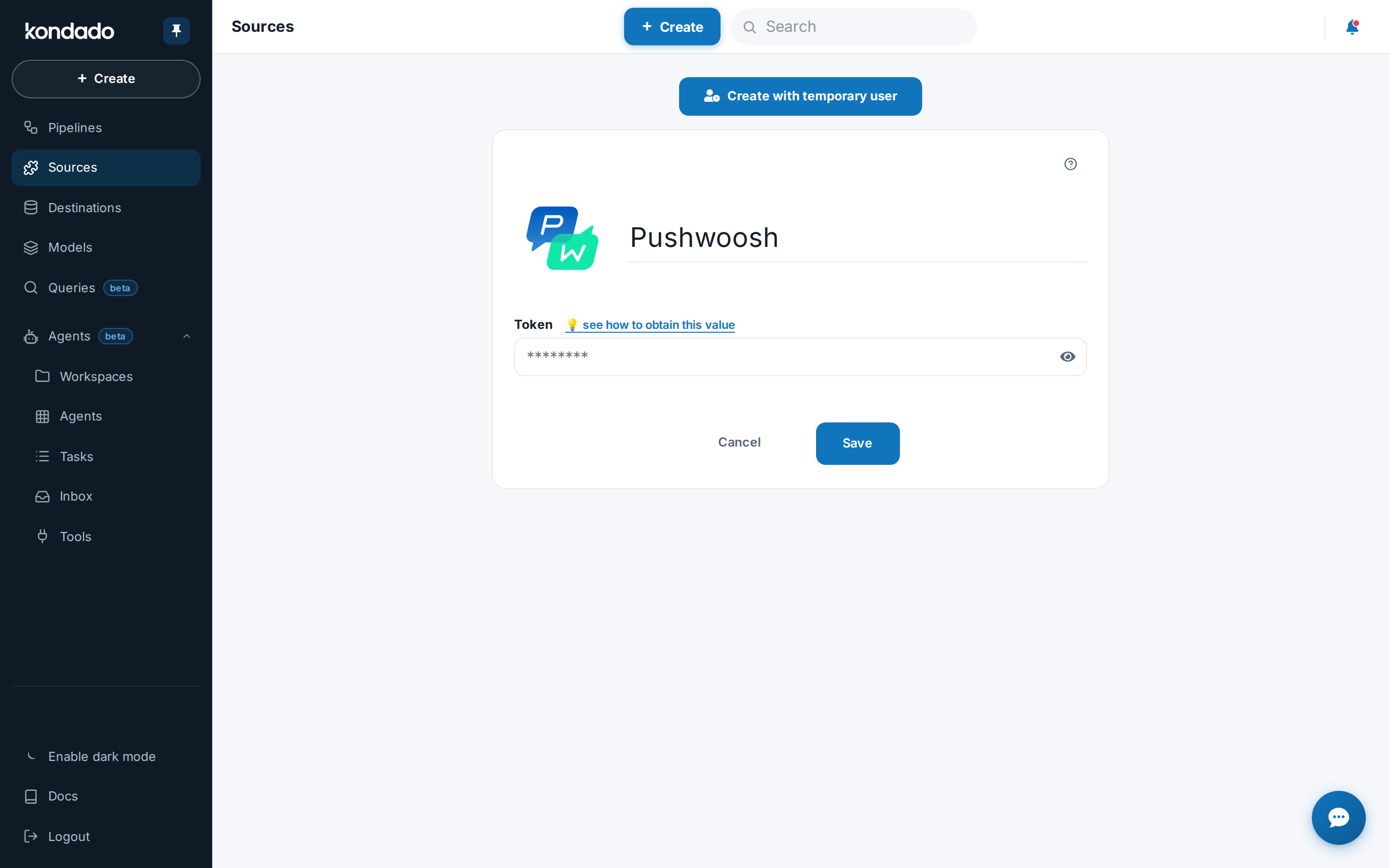
Now just click on SAVE to start receiving data from Pushwoosh in your Data Warehouse or Data Lake
Pipelines
Summary
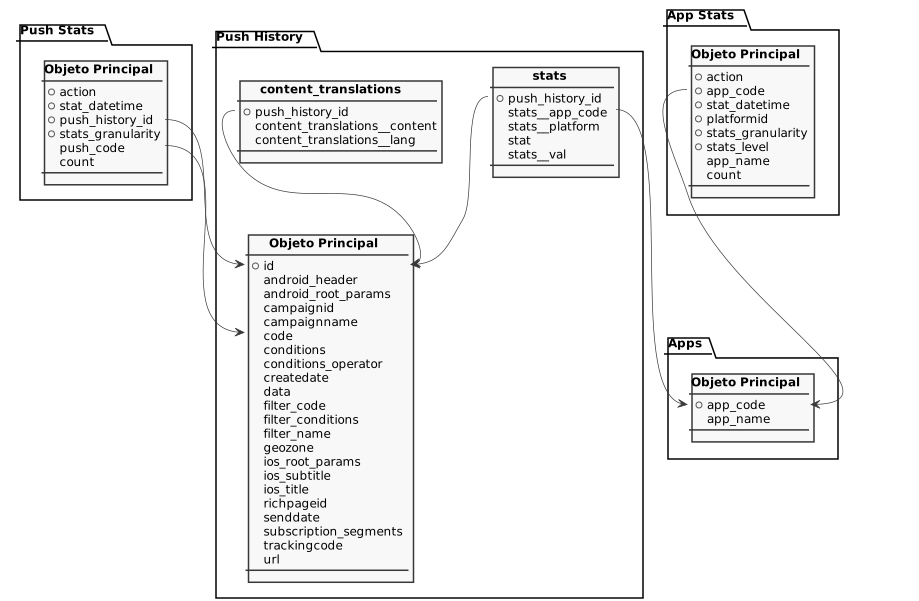
Relationship chart
Click to expand
App Stats
Replication type: Incremental with update window
Parameters:
- Update window after send (days): How many days after the send date (savepoint) the messages can still be updated
- Read start date (Savepoint): The date for the initial data replication
Relationships:
Aggregated per-application statistics over time, one row per action, app, platform, datetime, granularity and detail level. Carries the event count. Relates to pushwoosh_apps through the app_code column.
| Campo | Tipo | |
|---|---|---|
|
text |
||
|
text |
||
|
timestamp |
||
|
float |
[en] 1 - ios, 2 - blackberry, 3 - android, 5 - windows phone, 7 - osx, 8 - windows, 9 - amazon, 10 - safari |
|
|
text |
||
|
text |
||
|
text |
||
|
float |
Apps
Replication type: Full
Push History
Main object
History of push messages sent by the Pushwoosh account, one per row. Includes message code, campaign identifiers and name, per-platform content and titles (iOS/Android), targeting conditions, destination URL and the creation and send timestamps.
| Campo | Tipo | |
|---|---|---|
|
text |
||
|
text |
||
|
text |
||
|
text |
||
|
text |
||
|
text |
||
|
text |
||
|
text |
||
|
timestamp |
||
|
text |
||
|
text |
||
|
text |
||
|
text |
||
|
text |
||
|
text |
||
|
text |
||
|
text |
||
|
text |
||
|
timestamp |
||
|
text |
||
|
text |
||
|
text |
pushwoosh_push_history__stats
Child table of pushwoosh_push_history holding the delivery statistics of each push message, broken down by app and platform, one row per combination. Carries the statistic type (sent, opened, errors) and its value. Linked to the parent message through the push_history_id column.
| Campo | Tipo | |
|---|---|---|
|
text |
||
|
text |
||
|
text |
||
|
text |
||
|
float |
pushwoosh_push_history__content_translations
Child table of pushwoosh_push_history holding the content translations of each push message, one row per language. Carries the language (lang) and the message text in that language. Linked to the parent message through the push_history_id column.
Push Stats
Replication type: Incremental with update window
Parameters:
- Update window after send (days): How many days after the send date (savepoint) the messages can still be updated
- Read start date (Savepoint): The date for the initial data replication
Relationships:
Notes
- Part of this documentation was automatically generated by AI and may contain errors. We recommend verifying critical information
Add Pushwoosh as a data source on Kondado
Connect your Pushwoosh Private Offering account to Kondado by generating an API access token and configuring the data source.
Verify your Pushwoosh account type
Ensure your Pushwoosh account is of the Private Offering type, and use a user with higher access level for best results.
Generate an API access token in Pushwoosh
In your Pushwoosh control panel, go to API Access, click Generate new access token, configure it as preferred, then Save and copy the token value.
Add Pushwoosh on Kondado
Log in to Kondado, navigate to add data sources, and select the Pushwoosh connector.
Configure and save the data source
Enter a Name for your data source, paste the Token from step 2, then click SAVE to start receiving Pushwoosh data in your Data Warehouse or Data Lake.
Explore available Pushwoosh data pipelines
Once connected, you can access pipelines including Apps, Push history, Push stats, and App stats with their respective fields and data types.