Send Tiny ERP data to reports, spreadsheets and ETL

Get started for free

No credit card required | 14 days | 10 million records | 30 pipelines

sso google logo
Sign up with Google
sso facebook logo
Sign up with Facebook
sso microsoft logo
Sign up with Microsoft
sso linkedin logo
Sign up with Linkedin

or sign up with your email

By signing up, you agree to Kondado’s Terms of service and Privacy policy

shape Tiny ERP

Connect Tiny ERP Data to Power BI and Databases

Tiny ERP serves as the operational backbone for online stores, retail locations, service companies, and manufacturing industries, managing everything from sales transactions to financial records. Through Kondado, you can unlock comprehensive business data including detailed customer relationship information, complete inventory records, and full financial transaction histories. Extract granular details from your accounts payable and receivable modules, track complete order lifecycles from initial placement through final fulfillment, and monitor product inventory levels across all sales channels. This direct connection transforms your ERP from an isolated operational system into a powerful analytics engine, enabling you to combine Tiny ERP data with marketing, sales, and external sources for unified business intelligence.
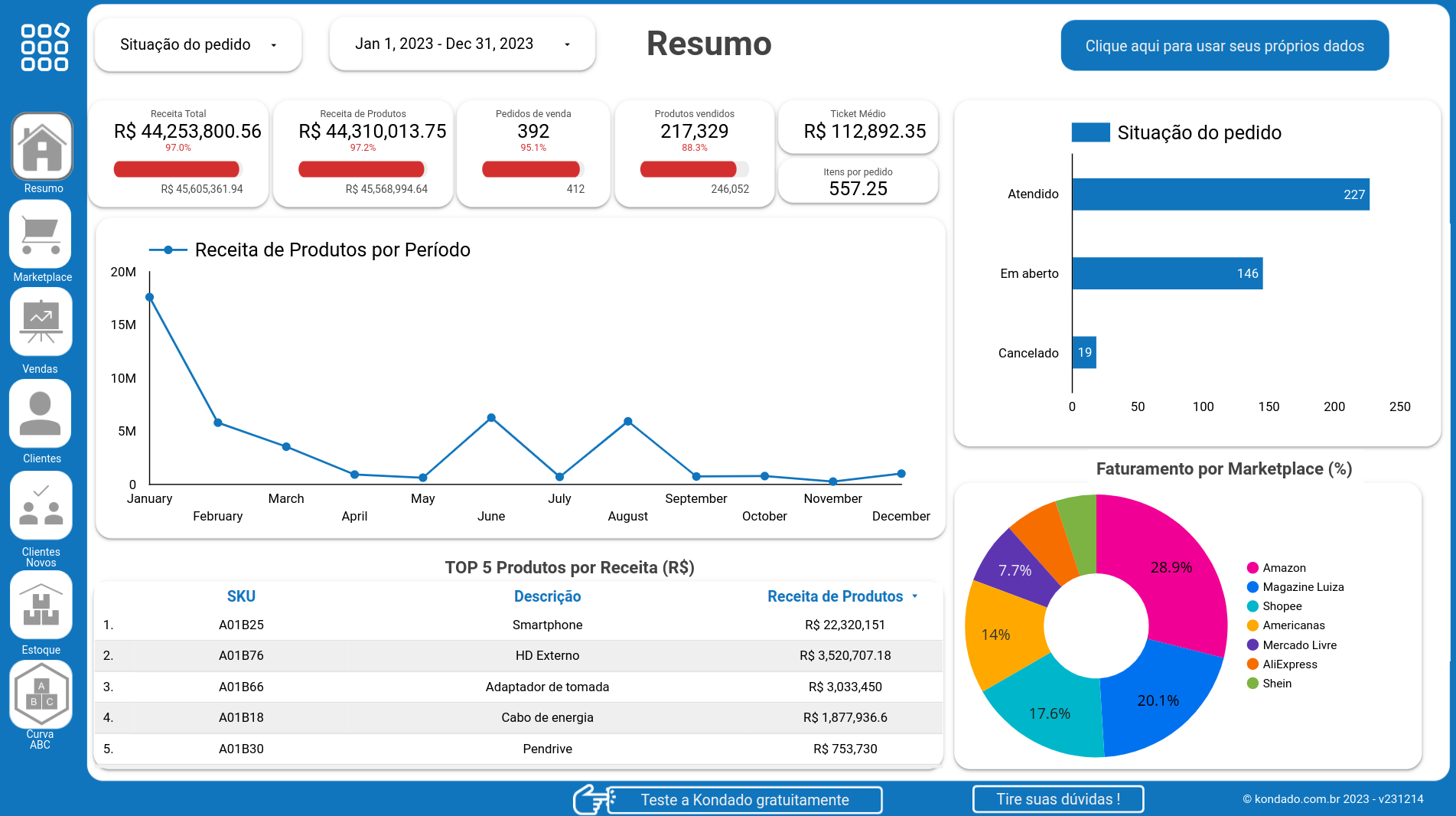
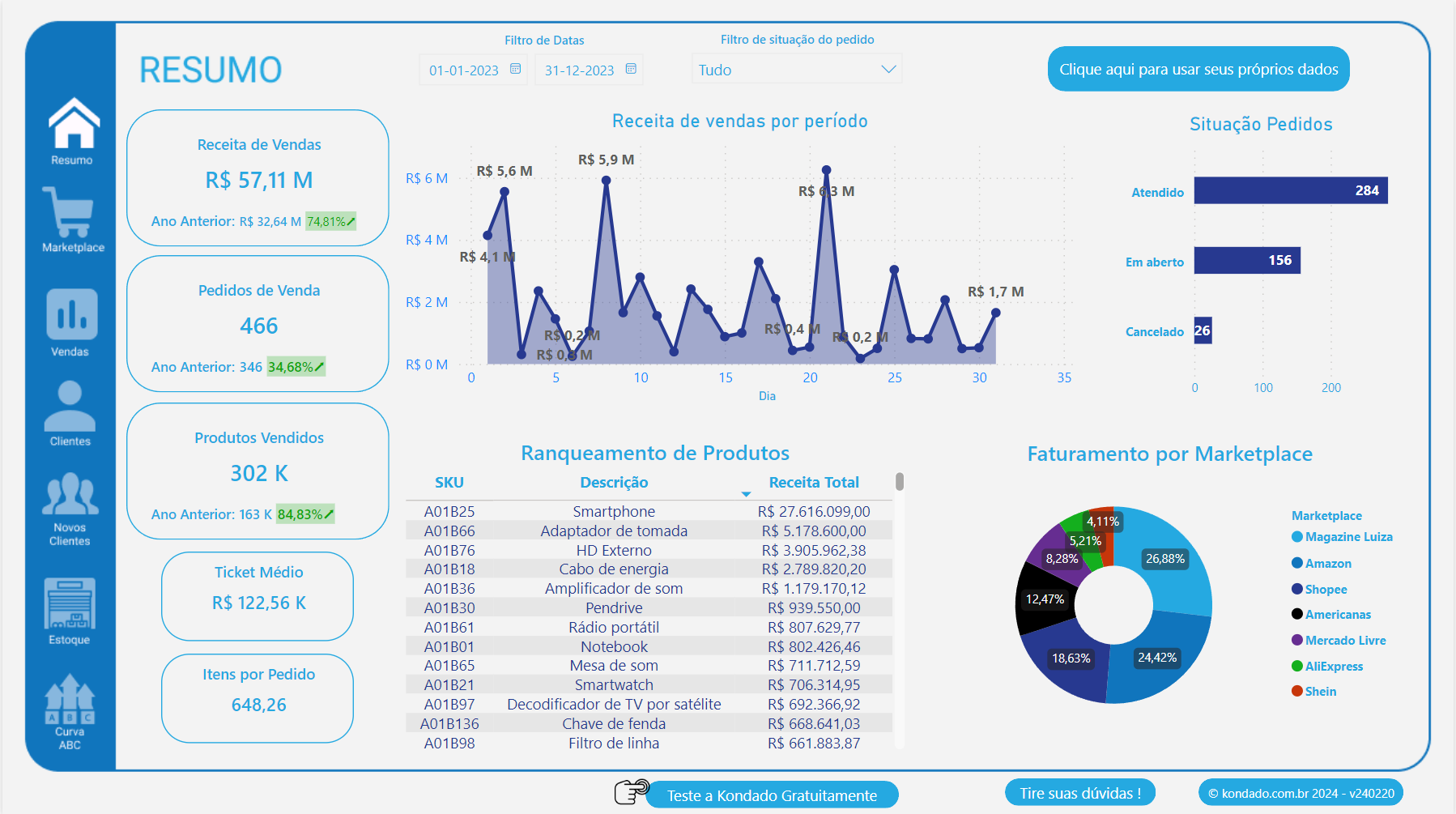
Kondado provides direct access to Tiny ERP through 15 distinct pipelines encompassing 792 fields, covering CRM issues, financial transactions, contact management, invoicing, orders, and product inventory with automated updates on your preferred schedule.

Marketing teams leverage order history and contact pipelines to identify high-value customer segments and optimize retention campaigns based on actual purchase patterns. Financial analysts utilize accounts payable and receivable data to improve cash flow forecasting, monitor outstanding balances, and streamline reconciliation processes. Operations managers track inventory turnover and product performance metrics to optimize stock levels and prevent fulfillment delays. Business leaders combine these ERP insights with external data sources to create comprehensive strategic dashboards that drive informed decision-making across the entire organization.

The Kondado platform takes care of refreshing Tiny ERP data, allowing you to stop wasting time with manual work and complex workflows, and focus on analyzing Tiny ERP data in your report, spreadsheet, data warehouse, data lake, or database

The following pipelines deliver specific business datasets from your Tiny ERP environment. Access your CRM Issues pipeline to track customer support ticket stages and resolution times, or analyze Accounts Payable and Accounts Receivable data to monitor outstanding balances and payment trends. The Order Details pipeline reveals purchase patterns and revenue metrics, while Product Inventory data helps identify stock levels and turnover rates across your catalog. Invoice Details provide comprehensive billing history for revenue reconciliation and tax reporting. By combining these datasets, you can perform cross-functional analysis such as correlating sales orders with inventory depletion, or matching customer service issues with specific product purchases and account payment histories. With automated refreshes configurable from every five minutes to daily intervals, your KPIs and operational dashboards remain current without manual data exports.

Try out all the features for free for 14 days

Available Tiny ERP data

15
available pipelines
792
extractable fields

Available integrations

Integration Description
CRM Issues Includes fields such as assunto_id, assunto_cliente, and assunto_data_acao, enabling tracking of the stage and status of each issue.
CRM Issues Details Presents detailed information such as cliente_codigo, cliente_nome, and cliente_endereco, facilitating the analysis of associated contacts.
Accounts Payable Contains records with id, data_emissao, and valor, allowing control over accounts payable and their respective statuses.
Accounts Receivable Includes fields such as id, data_emissao, and saldo, facilitating the management of accounts receivable and their history.
Contacts Contains information such as cliente_id_cliente, cliente_nome, and cliente_fone, allowing effective management of contacts.
Accounts Payable Details Includes fields such as id, data_vencimento, and situacao, allowing detailed tracking of accounts payable.
Accounts Receivable Details Presents information such as id, data_vencimento, and saldo, facilitating control over accounts receivable.
Invoice Details Includes fields such as id, data_emissao, and historico, allowing detailed tracking of issued invoices.
Invoice Details: XML Presents information in XML format, including fields such as id and tax data, facilitating integration with external systems.
Order Details Includes fields such as id, data_pedido, and valor_total, allowing detailed tracking of placed orders.
Product Inventory Table provides information about inventory, including fields such as id, product name, and available quantity.
Invoices Table contains details of invoices, featuring fields such as id, issue date, and customer name.
Orders Table lists the orders placed, including fields such as order id, order date, and status.
Products Table presents information about products, with fields such as id, name, and price.
Product Grid Table provides a detailed grid of products, including fields such as id, description, and category.
CRM Issues
Includes fields such as assunto_id, assunto_cliente, and assunto_data_acao, enabling tracking of the stage and status of each issue.
CRM Issues Details
Presents detailed information such as cliente_codigo, cliente_nome, and cliente_endereco, facilitating the analysis of associated contacts.
Accounts Payable
Contains records with id, data_emissao, and valor, allowing control over accounts payable and their respective statuses.
Accounts Receivable
Includes fields such as id, data_emissao, and saldo, facilitating the management of accounts receivable and their history.
Contacts
Contains information such as cliente_id_cliente, cliente_nome, and cliente_fone, allowing effective management of contacts.
Accounts Payable Details
Includes fields such as id, data_vencimento, and situacao, allowing detailed tracking of accounts payable.
Accounts Receivable Details
Presents information such as id, data_vencimento, and saldo, facilitating control over accounts receivable.
Invoice Details
Includes fields such as id, data_emissao, and historico, allowing detailed tracking of issued invoices.
Invoice Details: XML
Presents information in XML format, including fields such as id and tax data, facilitating integration with external systems.
Order Details
Includes fields such as id, data_pedido, and valor_total, allowing detailed tracking of placed orders.
Product Inventory
Table provides information about inventory, including fields such as id, product name, and available quantity.
Invoices
Table contains details of invoices, featuring fields such as id, issue date, and customer name.
Orders
Table lists the orders placed, including fields such as order id, order date, and status.
Products
Table presents information about products, with fields such as id, name, and price.
Product Grid
Table provides a detailed grid of products, including fields such as id, description, and category.

Try out all the features for free for 14 days

How to visualize Tiny ERP data in 3 steps

Connect Tiny ERP to dashboards, spreadsheets, or databases — no code required.

1
Add Tiny ERP Data Source

Configure your Tiny ERP credentials in Kondado to establish the direct connection and authenticate access to your business data.

2
Select Pipelines and Destination

Choose from the 15 available pipelines such as Accounts Payable, Orders, or Product Inventory, then select where to send your data, whether to Power BI, Looker Studio, Google Sheets, BigQuery, PostgreSQL, or other supported databases.

3
Visualize and Analyze Your Data

Access your replicated data in business intelligence dashboards for executive reporting, explore details in spreadsheets for ad-hoc analysis, or query structured tables in your data warehouse for advanced SQL-based insights.

Try out all the features for free for 14 days

Hundreds of data-driven companies trust Kondado
arezzo
brf
Contabilizei
dpz
Experian
grupo_soma
inpress
multilaser
olist
unimed
v4_company
yooper

Pick a Spreadsheet, Database, Data Warehouse or Data Lake to receive Tiny ERP data

Choose a tool to visualize your Tiny ERP data

If the software you need is not listed, drop us a messagem. You can use almost every tool

Frequently Asked Questions (FAQ)

Find answers to common questions about connecting Tiny ERP to dashboards, spreadsheets, and databases

What specific data can I extract from Tiny ERP using Kondado?
You can access 15 distinct pipelines including CRM Issues with ticket tracking fields, Accounts Payable and Receivable for financial management, Contacts for customer information, Order Details for sales analysis, Product Inventory for stock monitoring, and Invoice Details for billing records. These pipelines contain 792 fields covering everything from issue subject IDs and customer addresses to invoice XML data and product grid categories.
How do I connect Tiny ERP to Power BI or Looker Studio?
After adding Tiny ERP as a data source in Kondado, select your desired pipelines and choose Power BI or Looker Studio as your destination. The data flows automatically on your configured schedule, creating refreshable datasets in your chosen BI tool without manual CSV exports.
What are the available update frequency options for Tiny ERP data?
Kondado updates Tiny ERP data on a configurable schedule ranging from every five minutes to daily intervals. You can set different refresh frequencies for different pipelines based on your business needs, ensuring near-real-time visibility for critical metrics while optimizing processing for historical data.
Can I combine Tiny ERP data with other sources for unified analytics?
Yes, you can replicate Tiny ERP data alongside information from ecommerce platforms, advertising channels, and other ERP systems into the same destination. This enables cross-source analysis such as comparing Tiny ERP inventory levels with marketplace sales data or correlating financial records with marketing campaign performance.
Are there pre-built dashboard templates available for Tiny ERP analytics?
Yes, Kondado offers ready-made reports including the Olist Tiny Looker Studio Report and Olist Tiny Power BI Report. These templates provide immediate visualizations of your key metrics, allowing you to start analyzing sales performance, financial health, and operational efficiency within minutes of connecting your data.
Which databases and BI tools support Tiny ERP data replication?
You can send Tiny ERP data to BigQuery, PostgreSQL, MySQL, Redshift, SQL Server, Amazon S3, Power BI, Looker Studio, Google Sheets, and Excel. This flexibility allows you to choose the storage and analysis environment that best fits your existing infrastructure.
How can I analyze Tiny ERP order and inventory data together?
By selecting both the Order Details and Product Inventory pipelines, you can replicate synchronized datasets to your destination. This combination enables analysis of inventory turnover rates against sales velocity, identification of stockouts impacting order fulfillment, and optimization of purchasing decisions based on historical order patterns.

Try out all the features for free for 14 days