Connect Tiny ERP to Looker Studio: Dashboards in Minutes

Get started for free

No credit card required | 14 days | 10 million records | 30 pipelines

sso google logo
Sign up with Google
sso facebook logo
Sign up with Facebook
sso microsoft logo
Sign up with Microsoft
sso linkedin logo
Sign up with Linkedin

or sign up with your email

By signing up, you agree to Kondado’s Terms of service and Privacy policy

Tiny ERP
Looker Studio

Visualize Tiny ERP Data in Looker Studio

How to visualize Tiny ERP data in Looker Studio? Kondado provides a direct connection that lets you replicate your Tiny ERP records into Looker Studio without complex setup or intermediate databases. Simply connect your Tiny ERP account, select the pipelines you need from the 15 available options spanning sales, finance, inventory, and customer management, and start building visual dashboards within minutes. Your business data flows automatically on a configurable schedule you control, keeping your reports current without manual exports or technical maintenance. This approach eliminates spreadsheet juggling while giving marketing and operations teams immediate access to the metrics that drive revenue decisions and inventory optimization.

Kondado connects Tiny ERP directly to Looker Studio with 15 available pipelines covering 792 fields including orders, invoices, inventory, and CRM data, enabling automated report updates on schedules ranging from 5 minutes to daily for complete business visibility.

Our prices start from $19 USD/month, and you can try Kondado for free for 14 days with no credit card required

Combine your Tiny ERP sales records with financial metrics in Looker Studio to uncover actionable business insights. Track performance using pipelines like Orders and Accounts Receivable to monitor cash flow alongside sales velocity, or analyze Product Inventory against Invoice Details to identify stock gaps affecting revenue. These visualizations help you spot trends in customer behavior, optimize purchasing decisions, and manage working capital without technical expertise. By blending CRM Issues data with order history, you can also identify which customer service patterns correlate with repeat purchases, enabling targeted retention strategies that boost lifetime value.


Try out all the features for free for 14 days

Tiny ERP data available in Looker Studio

15
available pipelines
792
extractable fields

Available integrations

Integration Description
CRM Issues Includes fields such as assunto_id, assunto_cliente, and assunto_data_acao, enabling tracking of the stage and status of each issue.
CRM Issues Details Presents detailed information such as cliente_codigo, cliente_nome, and cliente_endereco, facilitating the analysis of associated contacts.
Accounts Payable Contains records with id, data_emissao, and valor, allowing control over accounts payable and their respective statuses.
Accounts Receivable Includes fields such as id, data_emissao, and saldo, facilitating the management of accounts receivable and their history.
Contacts Contains information such as cliente_id_cliente, cliente_nome, and cliente_fone, allowing effective management of contacts.
Accounts Payable Details Includes fields such as id, data_vencimento, and situacao, allowing detailed tracking of accounts payable.
Accounts Receivable Details Presents information such as id, data_vencimento, and saldo, facilitating control over accounts receivable.
Invoice Details Includes fields such as id, data_emissao, and historico, allowing detailed tracking of issued invoices.
Invoice Details: XML Presents information in XML format, including fields such as id and tax data, facilitating integration with external systems.
Order Details Includes fields such as id, data_pedido, and valor_total, allowing detailed tracking of placed orders.
Product Inventory Table provides information about inventory, including fields such as id, product name, and available quantity.
Invoices Table contains details of invoices, featuring fields such as id, issue date, and customer name.
Orders Table lists the orders placed, including fields such as order id, order date, and status.
Products Table presents information about products, with fields such as id, name, and price.
Product Grid Table provides a detailed grid of products, including fields such as id, description, and category.
CRM Issues
Includes fields such as assunto_id, assunto_cliente, and assunto_data_acao, enabling tracking of the stage and status of each issue.
CRM Issues Details
Presents detailed information such as cliente_codigo, cliente_nome, and cliente_endereco, facilitating the analysis of associated contacts.
Accounts Payable
Contains records with id, data_emissao, and valor, allowing control over accounts payable and their respective statuses.
Accounts Receivable
Includes fields such as id, data_emissao, and saldo, facilitating the management of accounts receivable and their history.
Contacts
Contains information such as cliente_id_cliente, cliente_nome, and cliente_fone, allowing effective management of contacts.
Accounts Payable Details
Includes fields such as id, data_vencimento, and situacao, allowing detailed tracking of accounts payable.
Accounts Receivable Details
Presents information such as id, data_vencimento, and saldo, facilitating control over accounts receivable.
Invoice Details
Includes fields such as id, data_emissao, and historico, allowing detailed tracking of issued invoices.
Invoice Details: XML
Presents information in XML format, including fields such as id and tax data, facilitating integration with external systems.
Order Details
Includes fields such as id, data_pedido, and valor_total, allowing detailed tracking of placed orders.
Product Inventory
Table provides information about inventory, including fields such as id, product name, and available quantity.
Invoices
Table contains details of invoices, featuring fields such as id, issue date, and customer name.
Orders
Table lists the orders placed, including fields such as order id, order date, and status.
Products
Table presents information about products, with fields such as id, name, and price.
Product Grid
Table provides a detailed grid of products, including fields such as id, description, and category.

Try out all the features for free for 14 days

How to create Tiny ERP dashboards in Looker Studio

Visualize your data automatically — no spreadsheet exports or custom scripts.

1
Connect Tiny ERP as data source

Enter your Tiny ERP API credentials in Kondado to establish a direct connection and select from 15 available pipelines including orders, invoices, and inventory data.

2
Select Looker Studio destination

Choose Looker Studio as your visualization platform and select the Via Kondado connection method to start receiving your Tiny ERP data automatically without intermediate databases.

3
Build dashboards and configure refresh

Create visual reports using the replicated data and set your preferred update frequency from 5 minutes to daily to keep insights current without manual work.

Access Tiny ERP data in Looker Studio and combine it with dozens of other data sources

If the source you want is not listed, drop us a chat message. We love to add new sources!

Visualize Tiny ERP data in other BI tools

If the software you need is not listed, drop us a messagem. You can use almost every tool

Hundreds of data-driven companies trust Kondado
arezzo
brf
Contabilizei
dpz
Experian
grupo_soma
inpress
multilaser
olist
unimed
v4_company
yooper

Frequently Asked Questions (FAQ)

Answers about visualizing Tiny ERP data in Looker Studio automatically

How do I set up Tiny ERP in Looker Studio without technical knowledge?
Connect your Tiny ERP account to Kondado by entering your API credentials in the data source setup. Select the pipelines you want to replicate, choose Looker Studio as your destination, and your data will flow automatically without coding or database configuration.
What ready-made dashboards are available for Tiny ERP data?
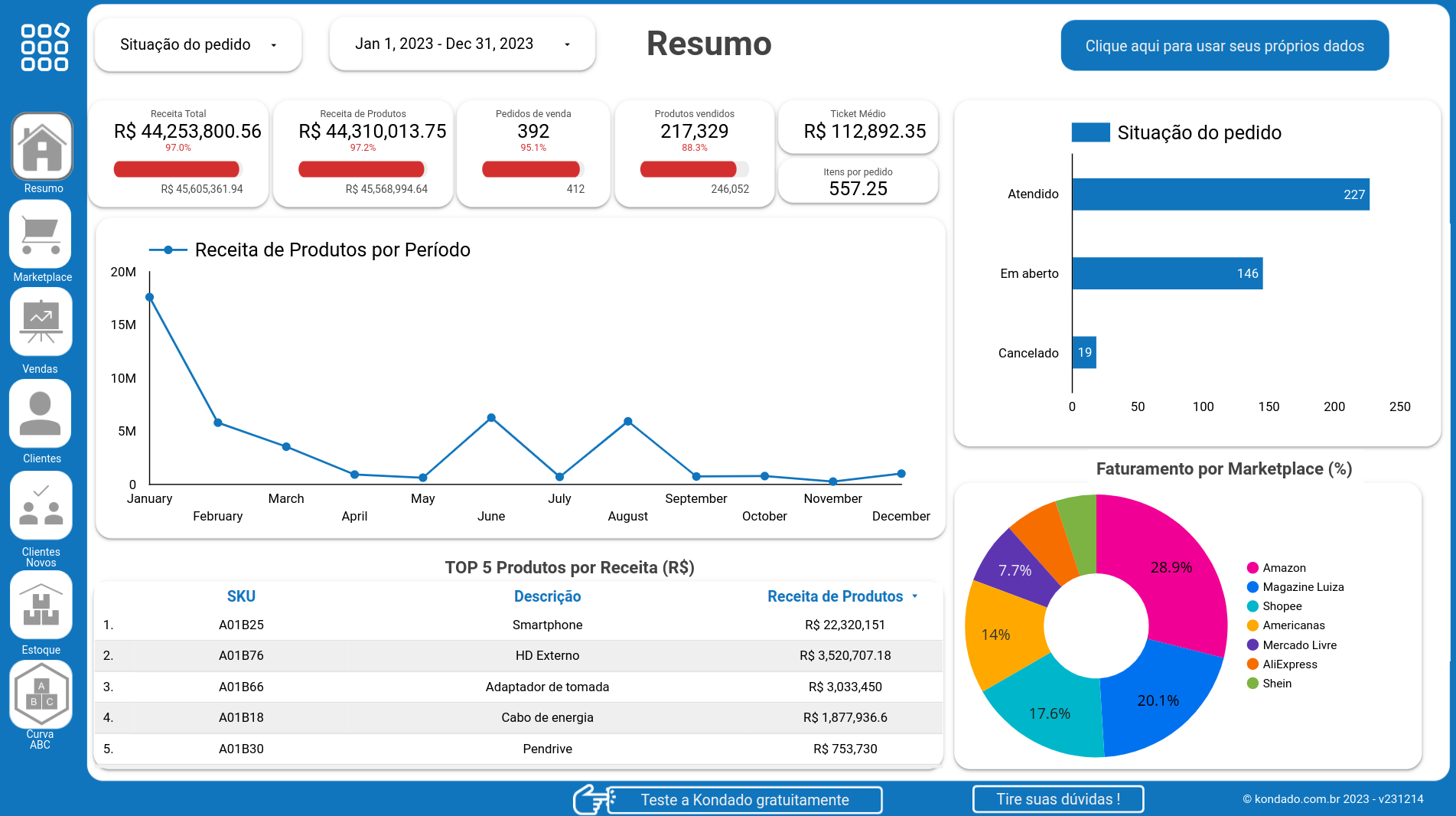
Ready-made dashboards are available to accelerate your analysis. You can use the Olist Tiny Looker Studio Report template for immediate insights into sales and operations, or explore the Olist Tiny Power BI Report if you also use Power BI for visualization.
How often does Tiny ERP data update in Looker Studio reports?
Configure your update frequency based on business needs, ranging from every 5 minutes for high-velocity sales tracking to hourly or daily for standard reporting. The automated schedule keeps your Looker Studio dashboards current without manual intervention.
Which Tiny ERP KPIs should I track in Looker Studio?
Focus on Accounts Receivable and Accounts Payable pipelines to monitor cash flow health, track Order Details for sales performance trends, and analyze Product Inventory to prevent stockouts. These metrics provide immediate visibility into financial position and operational efficiency.


Can I share Tiny ERP dashboards with my team?
Yes, Looker Studio allows you to share interactive dashboards with unlimited colleagues, clients, or stakeholders. Your team can view current business metrics from Tiny ERP without needing direct access to your ERP system or Kondado account.
Do I need to manually export data from Tiny ERP to update reports?
No manual exports are necessary once you configure the replication. Kondado automatically pulls selected pipelines from Tiny ERP on your chosen schedule, delivering fresh data directly to your reports without CSV downloads or copy-paste routines.

What is the Via Kondado connection method for Tiny ERP?
The Via Kondado connection creates a direct link between your Tiny ERP account and Looker Studio without requiring intermediate databases or complex technical configuration. This approach lets you replicate data on a configurable schedule while maintaining a streamlined setup process.

Try out all the features for free for 14 days